
Sri Lanka: A Complete 10-Day Family Itinerary
Discover the best route through Sri Lanka with kids, from tea-covered highlands to golden beaches and wildlife safaris. Our detailed 10-day itinerary covers the Cultural Triangle, hill country, and south coast.

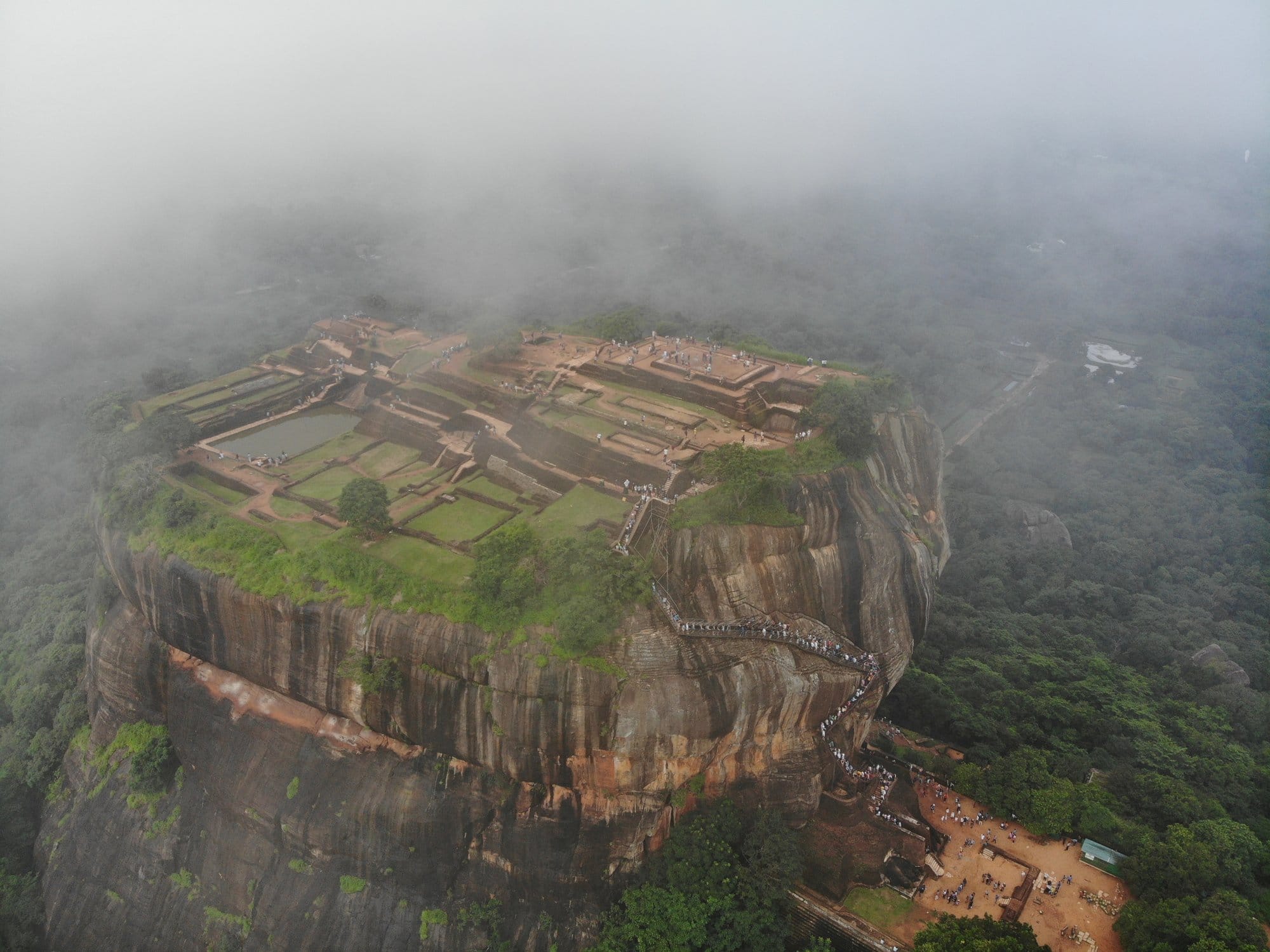
At 08:38 on Christmas morning 2018, our five-year-old was standing at the base of Sigiriya Rock, craning his neck at the iron staircase zigzagging up a 200-metre slab of granite, while my wife and our nine-year-old negotiated the first landing with a troop of macaques. We'd flown into Colombo on 23 December, slept off the jet lag on a guesthouse balcony in Negombo, and now — three days in — the island was starting to unfold: the 5th-century rock fortress at Sigiriya, then Polonnaruwa's ruins and a cooking workshop where a woman stirred curry over a wood fire. Over the next eight days we'd climb into the 2,071-metre highlands, watch a herd of roughly thirty elephants cross a river in Udawalawe, and bring in 2019 on the sand at Mirissa.
This guide distils what those eleven days taught us about travelling Sri Lanka with kids — what worked at ages five and nine, where we slowed down, and what we'd skip or double next time. The distances between zones are short, the people are warm, and the sequence below keeps the energy up for younger travellers without sacrificing the depth older kids (and adults) crave.
A quick calibration before we dive in. Our route was 11 days, late December into early January 2019 — dry season on the west and south coasts, cool and occasionally misty in the hill country. Our youngest was five, our eldest nine. If your kids are younger than five, swap Horton Plains (a six-kilometre plateau walk at 2,100 metres) for a tea-plantation visit and keep Sigiriya optional — the iron staircase is exposed and the last stretch is on all fours. Older kids do better on the full loop.
Bookings: Some of the links in this article are affiliate links. We may earn a small commission if you book through them, at no extra cost to you. This helps us keep MapTrotting running. To book your flights to Sri Lanka, compare flights to find the best prices.
The Route at a Glance
The eleven days below (ten on the road plus a final travel day) follow a loop from the west coast up into the Cultural Triangle, across the tea-country highlands, and down to the south coast — minimal backtracking and four clearly distinct zones:
Days 1–2: Negombo — jet-lag reset, fishing harbour at dawn, Christmas-Eve beach. Day 3: Sigiriya & Polonnaruwa — Christmas-morning climb of the rock fortress, medieval ruins, roadside cooking workshop. Days 4–5: Nuwara Eliya & the Hill Country — colonial tea town at 2,071 metres, Radella station (bilingual English/Sinhala signage), highland farms. Days 6–7: Ella — Horton Plains at dawn, Nine Arch Bridge, Ravana Falls, Buduruwagala temple. Days 8–10: south coast — Udawalawe safari, Mirissa (New Year's Eve on the sand), Galle Fort. Day 11: return via Colombo.
This route minimizes backtracking and gives you a real sense of Sri Lanka's diversity without rushing. You'll move every 2–3 days, which keeps the energy up for younger travelers without exhausting them.
Days 1–2: Negombo — Your Gateway to Sri Lanka
Most flights arrive at Colombo's Bandaranaike airport, and the easiest move is to head north to Negombo, just 45 minutes away. Negombo works brilliantly as your first stop: the beach is calm, the fishing-village atmosphere is authentic, and kids find something magical about watching bright wooden boats arrive each dawn with the night's catch.
You don't want to miss the sunrise at the fishing harbor. Arrive before 6 a.m., and you'll see nets cast in coordinated rhythm, fishermen hauling in the catch, and chaotic, joyful energy that no photograph really captures. Children aged 5 and up are usually captivated—it's sensory and active, not a museum.
Spend your second day exploring the village on foot or by tuk-tuk. The beaches north of town are less crowded. There's a lagoon where you can arrange a boat ride through mangroves, and the local restaurant scene is stellar for seafood. Galle Face Road, running north from town, has quiet stretches perfect for a swim.
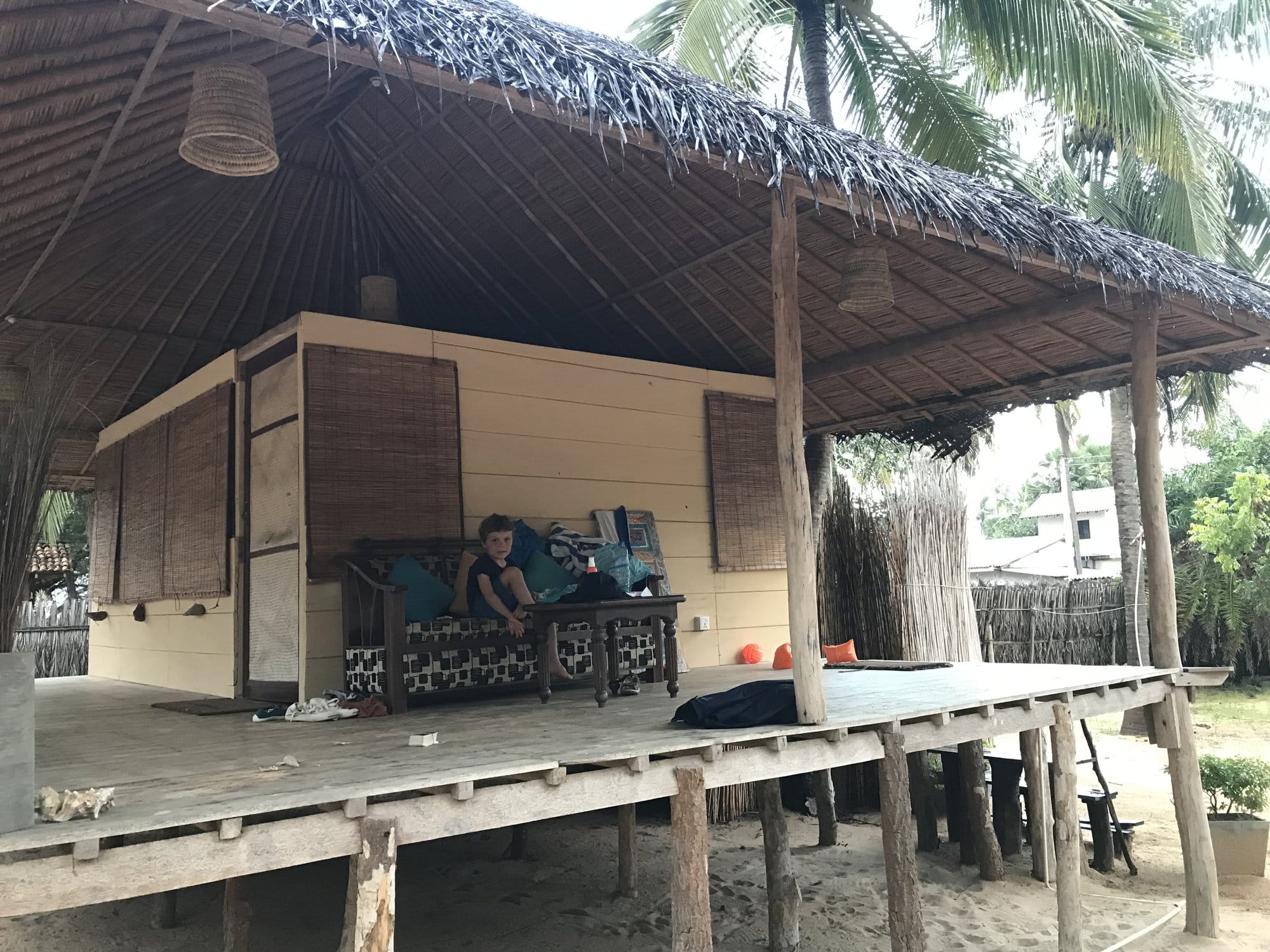
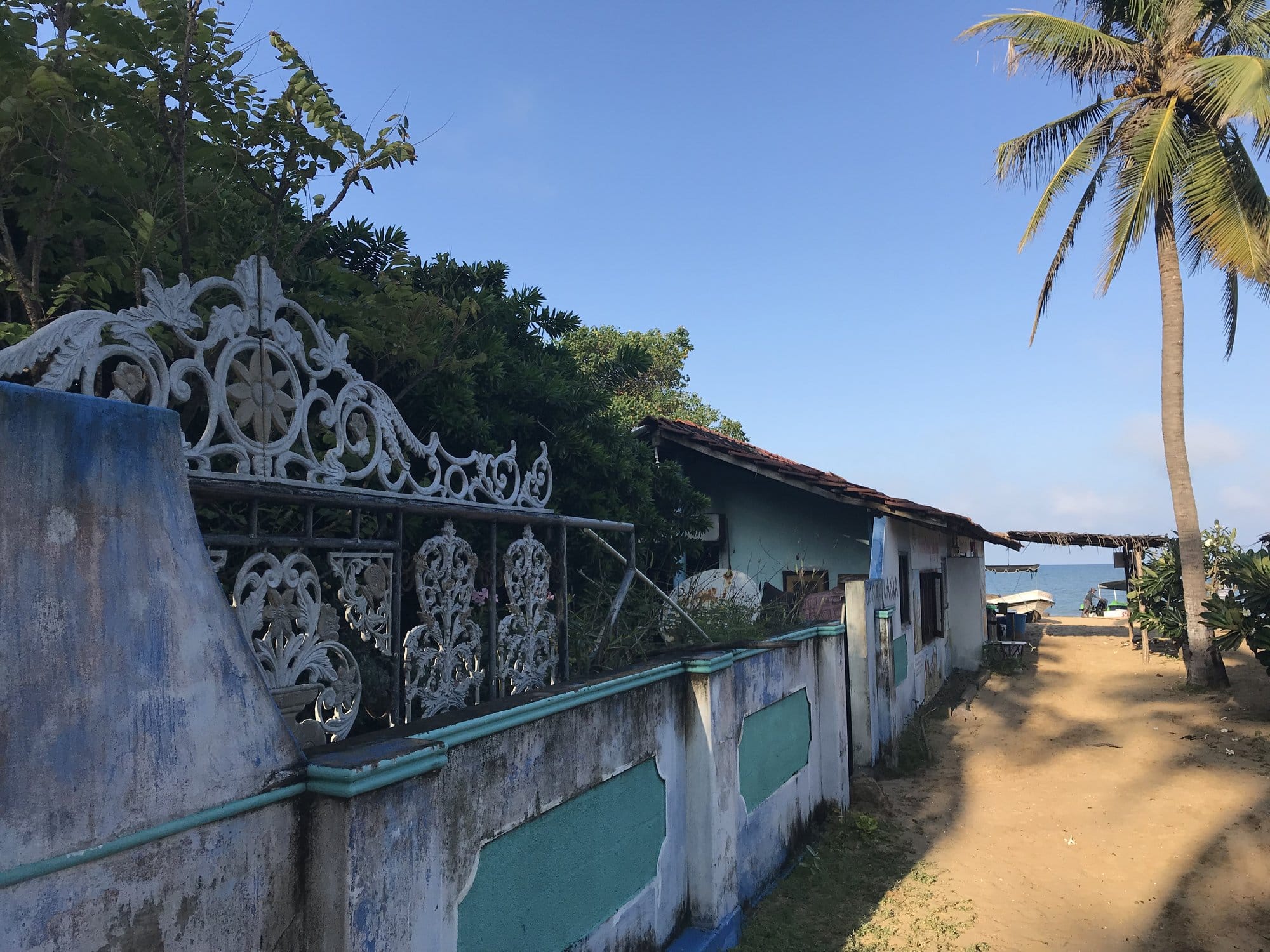
Accommodation: Budget $40–80 per night for family guesthouses with character. Many are run by locals who know the fishing schedules and can arrange early morning visits.
Day 3: Sigiriya & Polonnaruwa — Into the Cultural Triangle
From Negombo, it's a scenic 3–4 hour drive south and inland to Sigiriya, the centerpiece of Sri Lanka's Cultural Triangle. Sigiriya—a 5th-century rock fortress rising 200 meters from the jungle—is genuinely stunning, and kids find the climb thrilling if they're reasonably mobile (there are easier routes for younger children).
Start early to beat crowds and afternoon heat. The view from the top—jungle stretching to the horizon, with those ancient frescoes and the remains of the royal palace—is well worth the sweat. Plan 2–3 hours for the climb and summit time. You can get this e-ticket for Sigiriya Rock in advance to skip lines.
On the same day or your next morning, visit Polonnaruwa, the medieval capital about 40 km away. The ancient city spans a large area, but the central temple complex is breathtaking: vast stone Buddhas, intricate carvings, and stupas dating back over a thousand years. The scale and preservation are outstanding.
Full details: This is a rich, multifaceted zone. We've written a complete article on Sigiriya, Polonnaruwa, and the Cultural Triangle with accommodation tips, hidden temples, and the best times to visit—including advice on managing crowds with kids.
Days 4–5: Nuwara Eliya — Tea Country & Colonial Charm
From Sigiriya the road climbs south through Matale and up into the hill country. Nuwara Eliya sits at 2,071 metres — we measured it on the car's altimeter because the children wanted to know why it had suddenly got cold — and the temperature had dropped from around 30°C on the plains to about 15°C by the time we arrived. Bring a fleece; nobody mentions this enough.
Nuwara Eliya is the closest thing Sri Lanka has to a Scottish hill station in the wrong climate. The botanical garden is pleasant for about an hour (red flowers, wooden trellises, shade); the Grand Hotel lobby is worth ducking into for a pot of Ceylon in the mid-morning even if you're staying elsewhere; and the side streets have colonial houses with tin roofs painted the same pale blue as our guesthouse. The town itself is compact — everything within a twenty-minute walk of the post office.
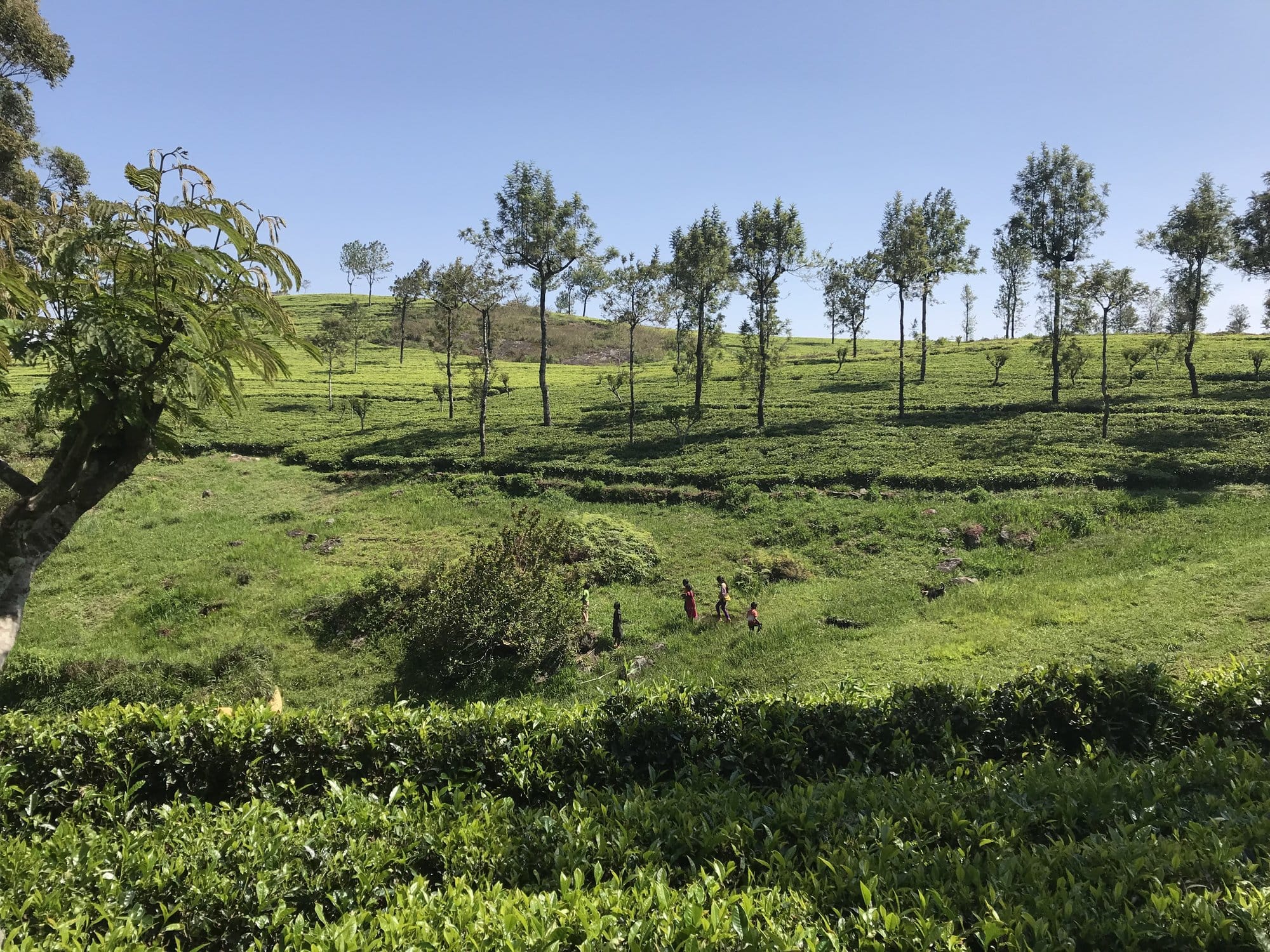
What you come for is the countryside. Our most memorable single detail was stopping at Radella station (GPS: 6.94°N, 80.72°E) just to photograph the bilingual sign — English on top, Sinhala script below, both in white on royal blue — and watching a blue-and-white train pull in from the valley side. The working tea estates run short family tours; we did one near Nuwara Eliya where a supervisor walked us through picking, withering, and rolling in about 45 minutes. Ten-rupee tasting at the end.
You can a day tour from Kandy that covers both Sigiriya and the surrounding sites, making the most of your time in the Cultural Triangle.
Full details: Our Hill Country article dives into the best plantations for families, the colonial heritage sites, and where to stay in and around Nuwara Eliya for a more immersive experience.
Days 6–7: Ella & Horton Plains — Hiking Heaven
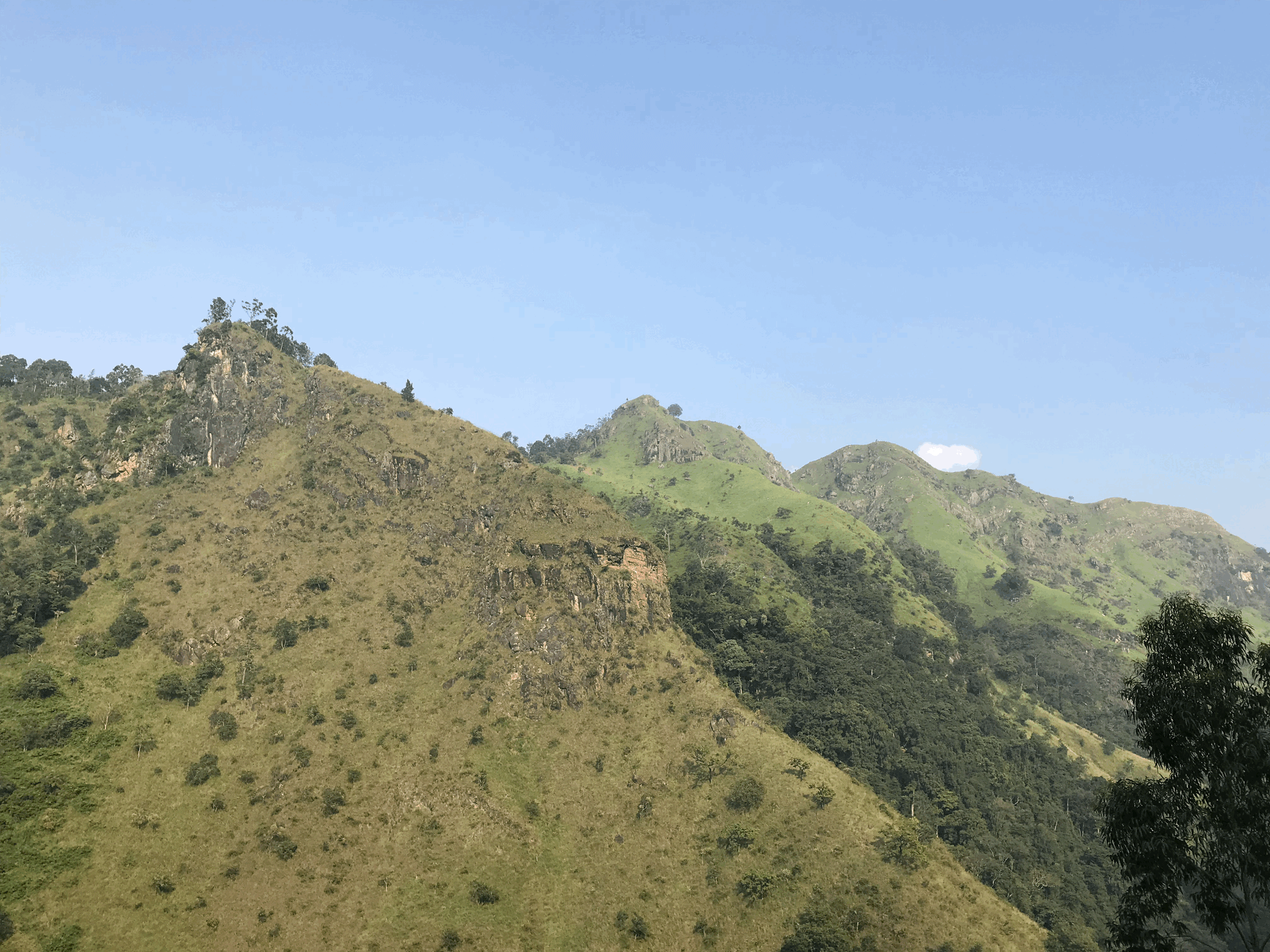
Ella is a three-street hill village at about 1,040 metres, with the train tracks running through it. We based ourselves here for two nights in a pale-blue colonial building with a banana-tree garden. The walkable things are: Little Adam's Peak (a 45-minute climb each way, genuinely doable from age six up), the Nine Arch Bridge, and Ravana Falls down the road. The less walkable thing — Horton Plains — is an early-morning drive away.
The star attraction is Horton Plains National Park, a high-altitude plateau about 30 km away. The most famous walk is the loop to "World's End"—a dramatic cliff edge with views dropping 900 meters into the valley below. It's about 9 km roundtrip and manageable for fit kids aged 7 and up. The landscape is unlike anywhere else on the island: grassland, mist, rhodododendron forests, and sudden vistas. You can arrange first-class scenic train tickets to reach the area in style.
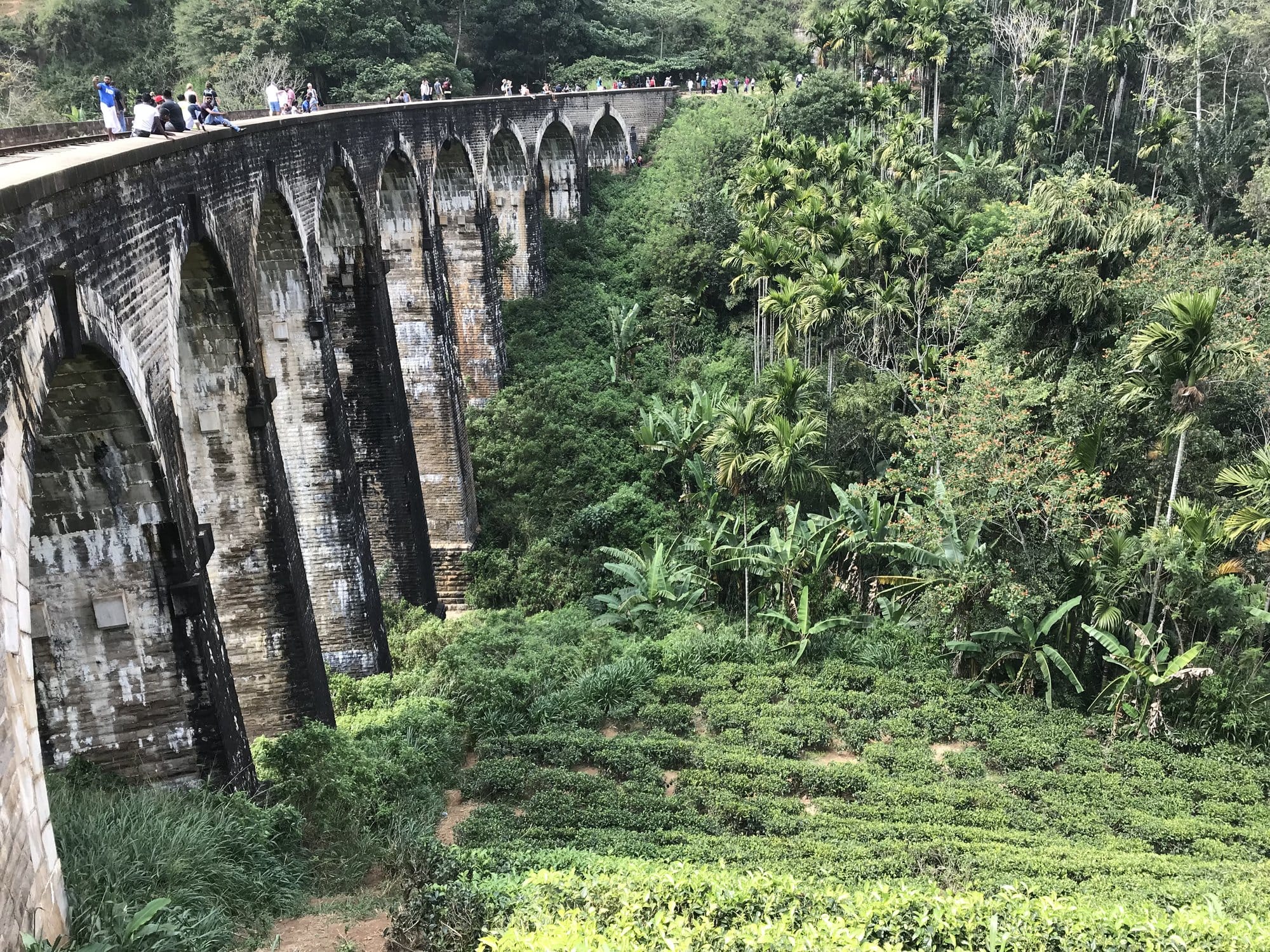
Closer to Ella village, you'll find the Nine Arch Bridge, a stunning Victorian viaduct built by the British. It's photogenic beyond measure, especially when a train crosses it (the timetable is predictable). Many families hike to the bridge from Ella in an hour and combine it with a longer walk through tea plantations.
Full details: Our Ella and Horton Plains article covers the best hikes for families, how to time your visit to see the trains, accommodation options, and tips for managing the cooler temperatures at elevation.
Days 8–10: The South Coast — Safari, Beach & Fort
Leave the highlands behind and descend toward the coast—a drive that takes you through ever-changing landscapes. Your final three days combine three distinct experiences: wildlife, beaches, and history.
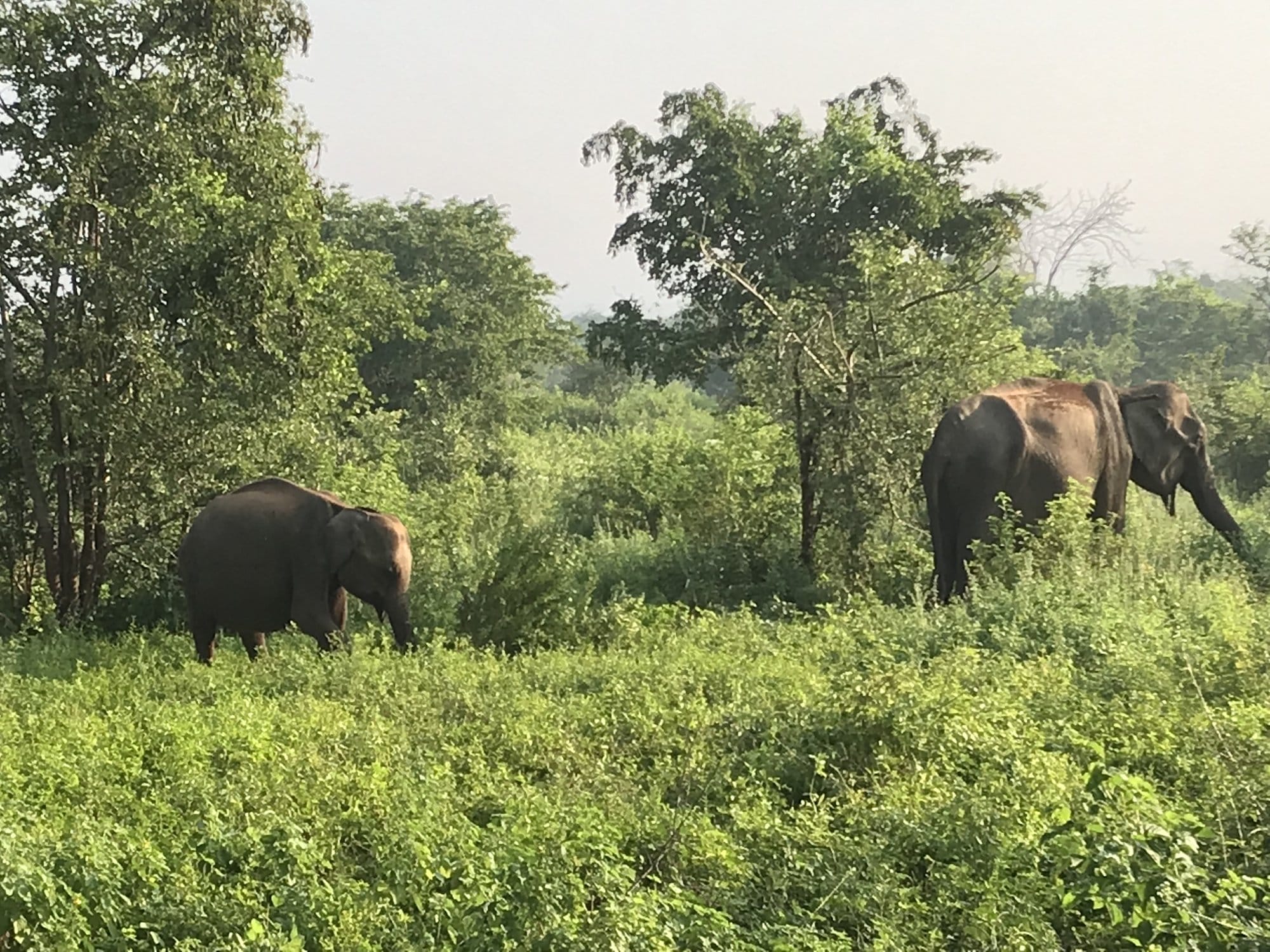
Start at Udawalawe. Our jeep left the gate at dawn on 30 December; soon after we were watching three adult elephants cross a forest track in the morning light, and the river-crossing — roughly thirty animals, calves wedged between adults — happened about forty minutes later in the open grassland east of the main lagoon. The light was still low. Don't forget water and a hat: the jeeps are open and the sun climbs fast. Leopards exist here on paper; in practice you're going for the elephants and the wading birds. Book the jeep the evening before through your guesthouse — everyone in Udawalawe knows the drivers.
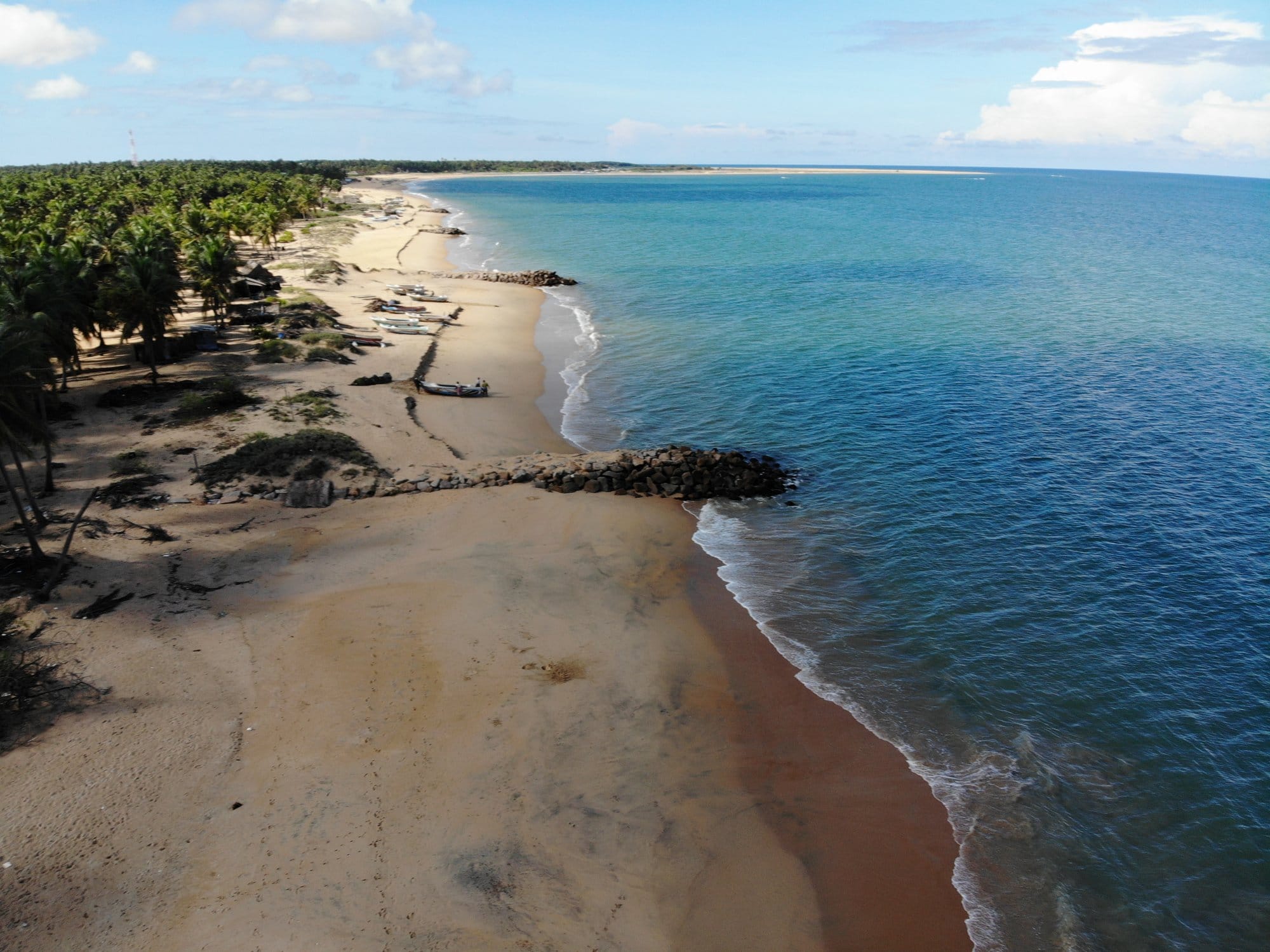
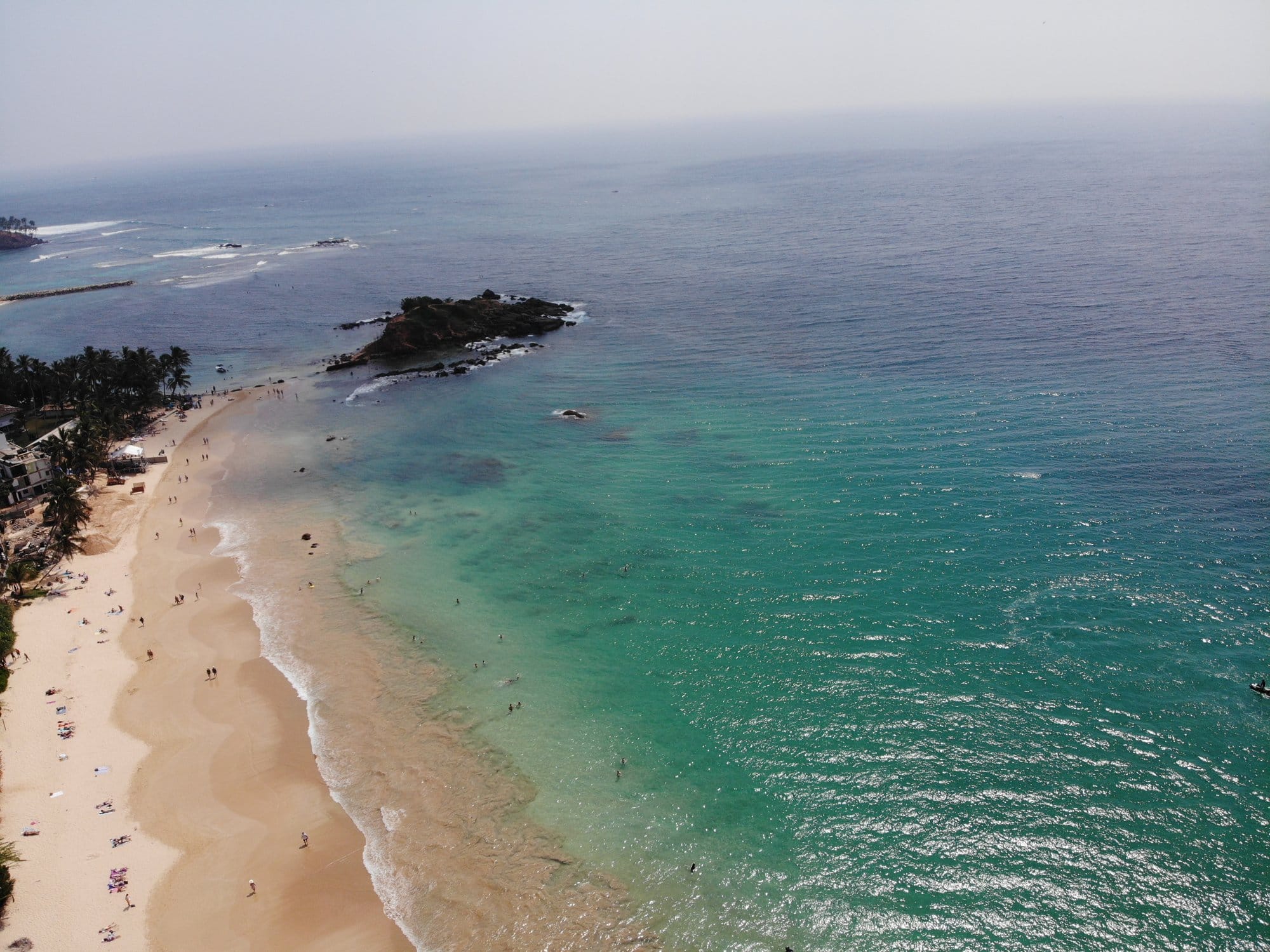
Mirissa, on the south coast, is where we spent 31 December and 1 January 2019. A crescent of sand, an islet you can wade to at low tide, fishing boats launched from the beach at first light. We brought in the new year at midnight with a small crowd on the sand (purple lighting, a bonfire, brief fireworks over the water) and watched the sun come up over Galle-side breakers a few hours later. The whale-watching boats run from November to April out of Mirissa harbour and reach the blue-whale grounds off Dondra Head in under an hour — they leave at 06:30 and you book the night before.
Galle is a 45-minute drive east of Mirissa. The fort — begun by the Portuguese in the 16th century, rebuilt by the Dutch in the 17th — is an actual working old town, not a museum: post office, grocers, guesthouses, a lighthouse under palms. We arrived mid-afternoon on 1 January, bought tiger prawns the size of a thumb-and-a-half at the market (around €3 for a plateful), and walked the ramparts in the late afternoon as the light went orange. Give it three hours minimum.
Full details: Our South Coast guide covers the best safari operators, the quietest beach towns, Galle's history, and practical information on timing your safari and staying safe with kids in remote areas.
Practical Information
Best Time to Visit
Sri Lanka's climate is complex—different regions have different seasons. The island experiences two monsoons, but the timing varies by coast.
Ideal window: January to April. Expect warm, mostly dry weather across the whole island. March and April can be hot inland, but mornings are typically cool in the highlands. The south and west coasts are dry; the east and Cultural Triangle catch occasional showers.
Shoulder seasons: December (December-January) and May-September can work, but you'll encounter more rain in specific zones. Prices drop significantly, crowds thin, and many families find the trade-off worthwhile.
Avoid: June-September is monsoon season on the west and south coasts—heavy rain, rough seas, and potential flooding in lower areas.
Getting Around Sri Lanka
Domestic flights: Consider a short flight from Colombo to the Cultural Triangle (Sigiriya/Dambulla) if time is tight—saves 5 hours of driving.
Private driver/car rental: Highly recommended for families. Road conditions are manageable, but driving style takes adjustment. A driver with a van costs $40–60/day and removes stress. Book through your hotel or reputable agencies.
Trains: The highland train from Nanuoya to Ella is scenic and slower-paced, but expect crowds and no guaranteed seating. Treat it as an experience, not reliable transport.
Buses: Frequent and cheap, but crowded and very warm with young kids in peak heat. Better as an occasional experience than daily transport.
Tuk-tuks: Perfect for short distances in towns. Negotiate price beforehand.
Budget Tips for Families
Accommodation: $40–80/night for comfortable, family-run guesthouses with personality. Upscale resorts run $150–250+.
Food: Eating local is cheap and delicious. Meals at small restaurants: $2–5 per person. Western-style restaurants: $8–15 per person.
Activities: Many experiences are free or very cheap—beaches, exploring towns on foot, village visits. Paid activities (safaris, park entries, tea plantation visits): $10–30 per person.
Transport: A private driver is often cheaper than renting a car if you factor in fuel and stress.
Total family budget: A family of four can travel comfortably on $50–80/day if you share accommodation and eat locally.
Health & Safety
Water: Tap water in most tourist areas is treated but drink bottled water to be safe. Brands like Lion or Elephant are widely available.
Food safety: Street food is generally safe if it's cooked fresh in front of you. Avoid salads and raw vegetables at cheap stalls. Seafood in coastal towns is excellent.
Vaccinations: Consult your doctor, but typhoid, hepatitis A, and Japanese encephalitis are often recommended. Malaria is present in some areas; ask your doctor about prophylaxis.
Insects: Mosquito-borne dengue fever is a concern. Use repellent and cover up at dawn/dusk, especially in the lowlands.
Road safety: Driving is chaotic but manageable. Drivers are used to pedestrians and animals. Drive defensively and avoid night driving.
General safety: Sri Lanka is very safe for tourists. Police presence is visible. Use basic urban precautions in Colombo and avoid displaying expensive gear.
Find the Best Place to Stay
Accommodation runs the gamut from budget guesthouses to five-star resorts, and family-run places often offer the warmest welcome. Use the map below to explore options across the route, from Negombo to Galle:
FAQ
How long does it take to drive between the zones?
Negombo to Sigiriya: 3–4 hours. Sigiriya to Nuwara Eliya: 3–4 hours. Nuwara Eliya to Ella: 2–3 hours. Ella to Udawalawe: 4–5 hours. Udawalawe to Mirissa: 2 hours. Mirissa to Galle: 45 minutes. These are rough times and include stops.
Can we do this with children under 5?
Yes, but adjust expectations. Sigiriya's climb is difficult with a toddler. Horton Plains is too demanding. Focus on Negombo, easier Cultural Triangle sites, gentle tea plantation walks, and beaches. Hire a driver and stay flexible.
Is it possible to visit Sri Lanka for 5 days instead?
Absolutely. Skip Horton Plains or combine Negombo and the south coast. Focus on Negombo + Sigiriya + Nuwara Eliya + Ella, or Negombo + south coast only. You'll sacrifice depth but still have an excellent trip.
What should we pack?
Lightweight, breathable clothes. Lightweight rain jacket (even in dry season). Comfortable walking shoes and sandals. Sun hat, sunscreen, and insect repellent. Layers for the cool highlands. Modest clothing for temple visits (shoulders and knees covered). Kids' first-aid supplies (bandages, antihistamine, anti-diarrheal).
Pierrick travelled Sri Lanka for 11 days in late December 2018 with his family of four — children then aged five and nine. The three moments that keep coming back to him when people ask where to start are the Christmas-morning climb at Sigiriya, the Udawalawe elephant crossing at dawn on 30 December, and the bilingual sign at Radella station. More about his approach on the About page.
More to Explore
If Sri Lanka's mix of culture, wildlife, and beaches has inspired your next family adventure, you might also enjoy these destinations we've explored: